Coordination Chemistry I - Chapter 2

Coordination Numbers and Structures

Geometry recognition, coordination number inference, and structure reasoning with 3D models.

Ch 1: Nomenclature

Session mode

Adaptive mode
Rigor mode
Label helper

Skill focus

  • Coordination number from denticity
  • Geometry mapping and ambiguity
  • Rare structures (CN 5-8)
  • 3D recognition under pressure

Coordination numbers and structures

  • Coordination number equals total donor atoms bound.
  • CN 2, 4, 6 dominate; 5, 7, 8, 9 are less common but important.
  • Square planar vs tetrahedral depends on metal and ligand field.
  • Use 3D geometry to distinguish TBP vs square pyramidal.

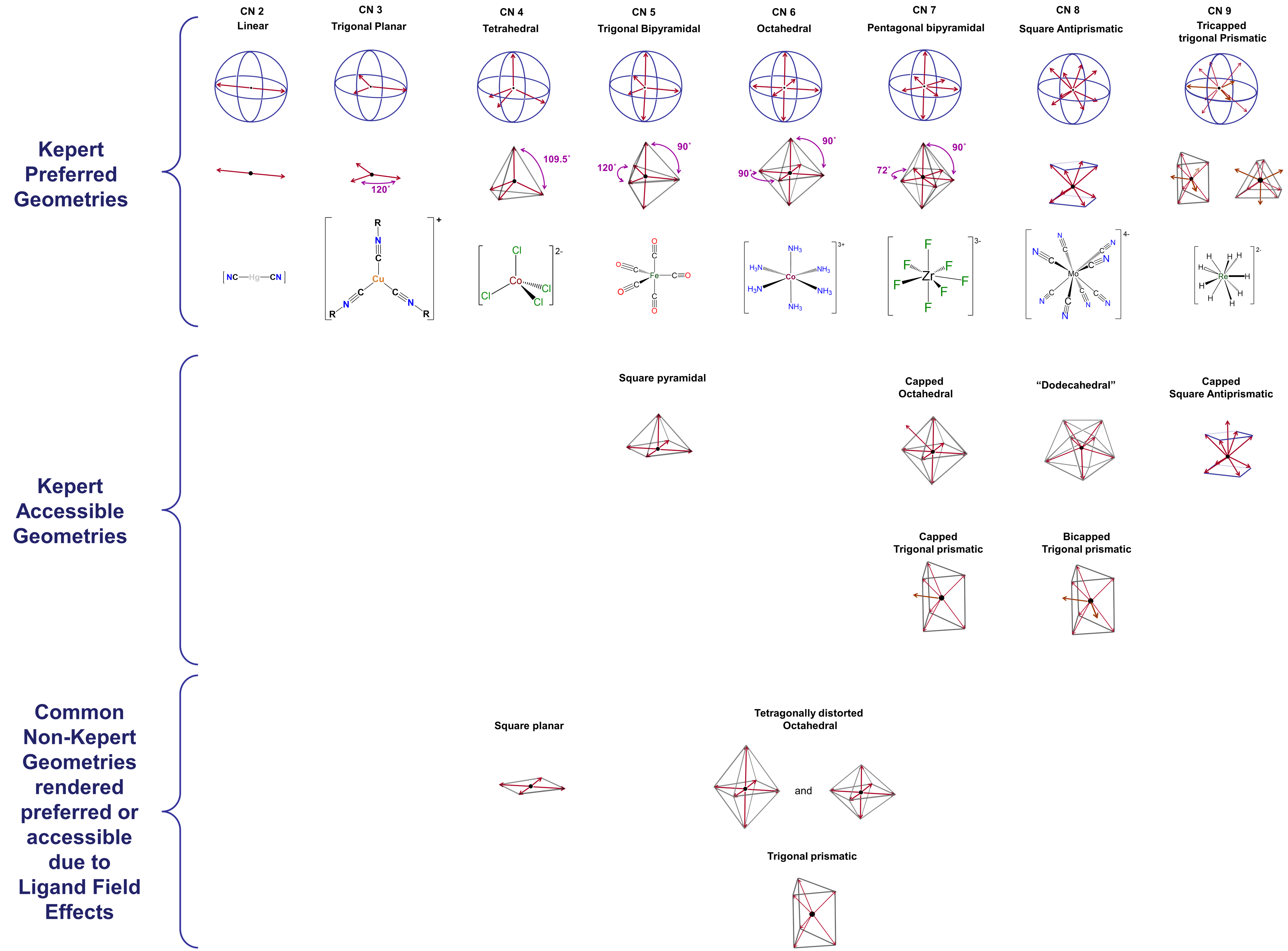
Geometry by coordination number
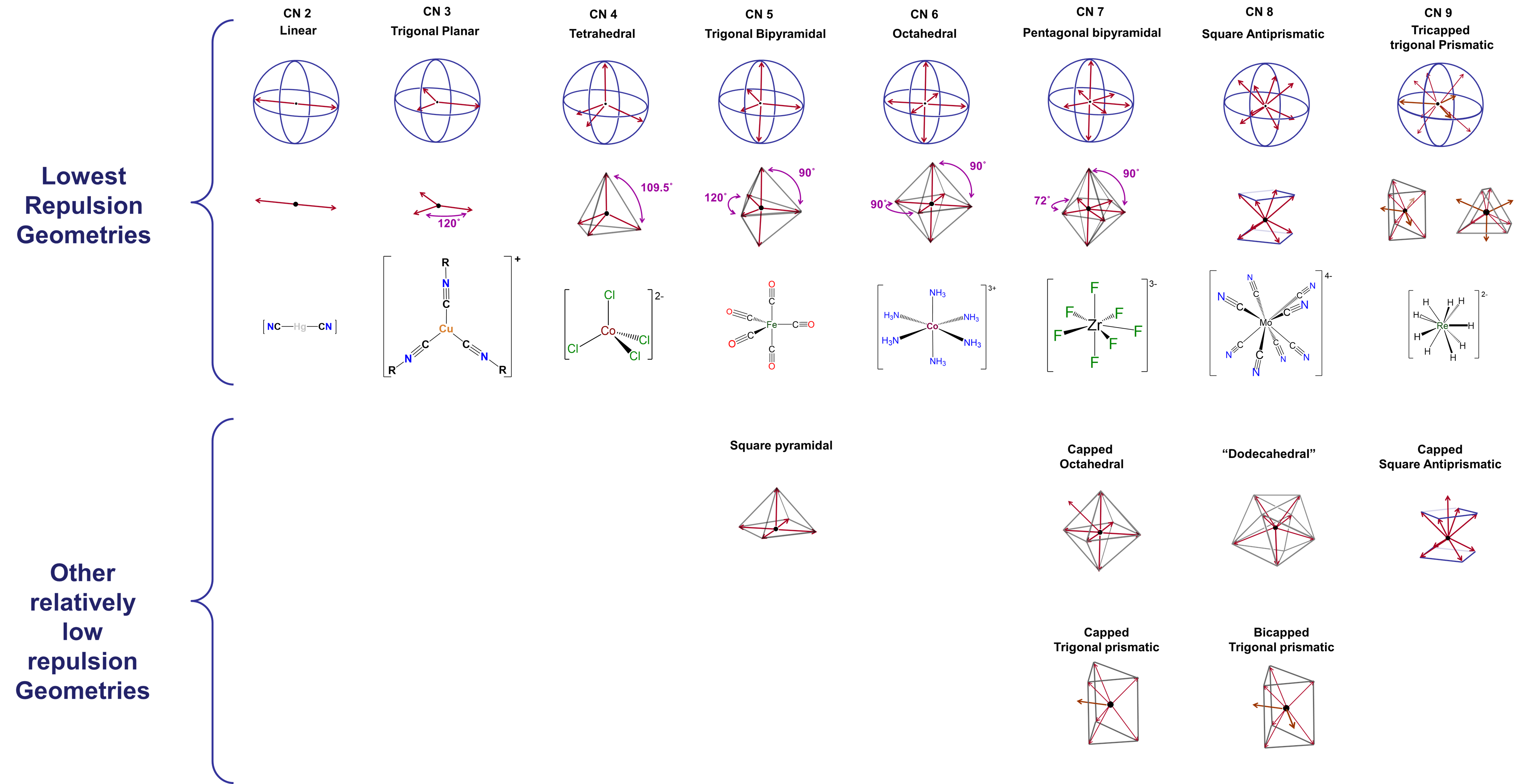
Lowest repulsion geometries for coordination numbers 2 through 9

Kepert preferred geometries

Kepert preferred and accessible geometries

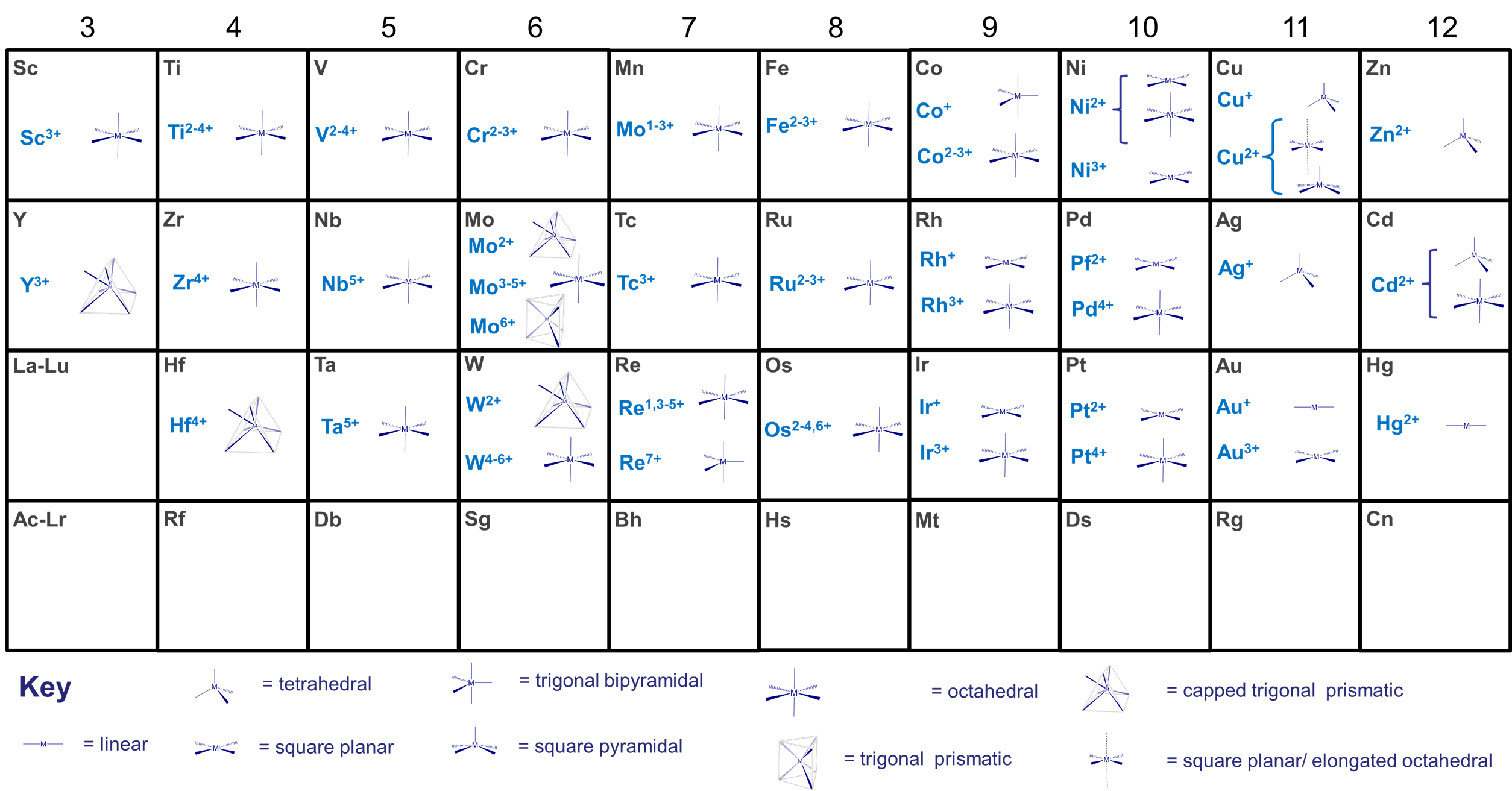
Metal preferences

Coordination numbers by metal and oxidation state
Geometry Match CN 6 Octahedral

[Co(en)2Cl2]+

Determine coordination number and geometry.

3D model

3D view shows coordination geometry and ligand positions.

Streak 0
Accuracy 0%
Questions 0